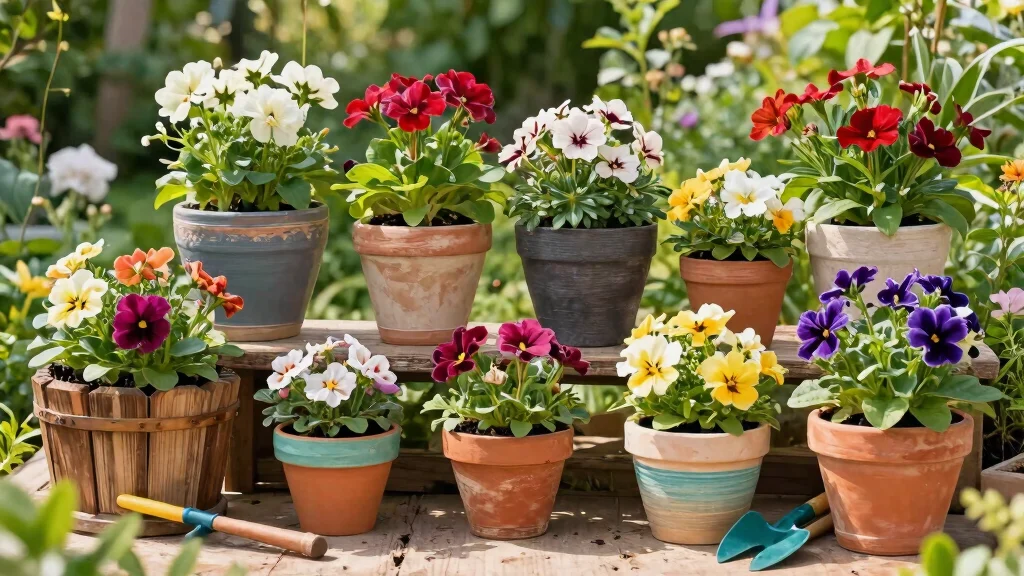
Gardening is a delightful pursuit that awakens the senses and brings joy to every season. This time of year always reminds me of colorful blooms and the earthy scent of fresh soil. You might find yourself craving ways to spruce up your garden. If you’re someone who loves getting your hands dirty and embracing nature, this blog post is for you. It’s packed with ideas that transform standard flower pots into creative expressions of art and sustainability.
Whether you’re a seasoned gardener or just starting out, the beauty of container gardening lies in its accessibility and versatility. You can choose from various materials and styles to suit your garden’s vibe. I’ve gathered 14 unique flower pot ideas that are eco-friendly, fun, and perfect for every garden style, season, and skill level. Some of these projects might even tap into your crafty side, allowing you to express your creativity while nurturing your plants.
From upcycled tin can planters to elegant stone and pebble pots, you’ll discover ways to make every corner of your garden shine. Plus, these projects can help you learn the best potting techniques and seasonal gardening tips, whether you’re planting vibrant annuals or calming succulents. Get ready to dig in and create unique containers that will not only beautify your outdoor space but also reflect your personal style and commitment to sustainability.
Key Takeaways
– Explore 14 creative flower pot ideas that cater to various garden styles and skill levels, allowing anyone to participate in gardening.
– Discover eco-friendly options like upcycled materials, ensuring your gardening practices contribute positively to the environment.
– Learn the best potting techniques and seasonal gardening tips to help your plants thrive in their new homes.
– Find unique container gardening solutions that add personality and charm to your outdoor space, perfect for showcasing your favorite flowers.
– Enjoy beginner-friendly projects that serve as perfect starting points for new gardeners, making it easy to get involved in this rewarding hobby.
1. Upcycled Tin Can Planters
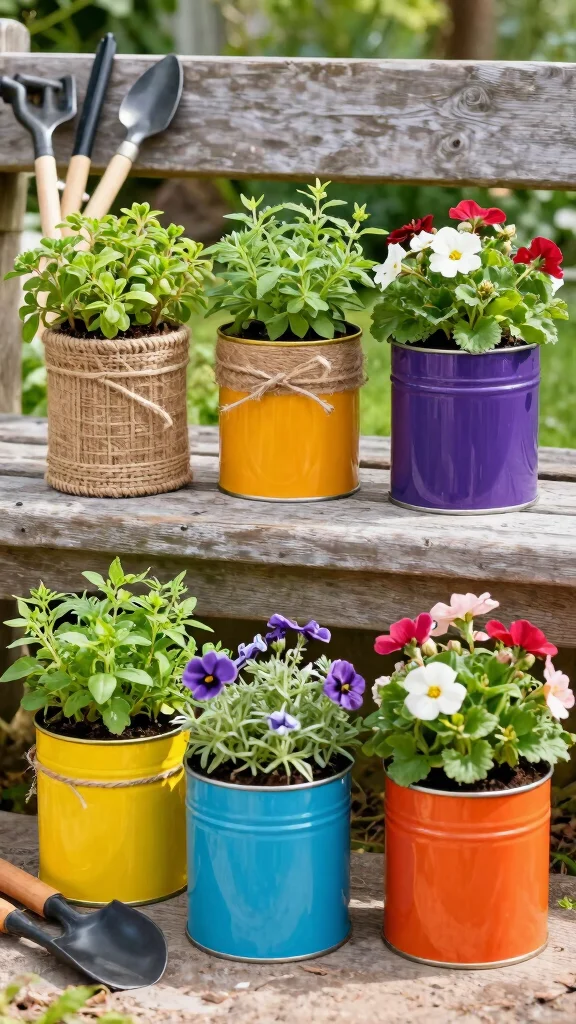
Revitalize your old tin cans by turning them into adorable planters! This fun and budget-friendly project is perfect for anyone looking to add a personal touch to their garden. With just a few simple steps, you can create eye-catching pots that showcase your favorite herbs or small flowers. Get creative by painting the cans or wrapping them with jute twine for a rustic charm that brightens up your space.
Start by cleaning your cans and adding drainage holes to the bottom. You can then unleash your creativity with colorful designs or natural textures. These charming planters not only look great but also promote sustainability by giving a new life to materials that would otherwise be discarded.
Key steps to get started:
– Clean and prepare empty tin cans.
– Create drainage holes in the bottom for effective water flow.
– Decorate with paint or twine for a unique finish.
– Fill with potting soil and plant your chosen herbs or flowers.
These upcycled tin can planters provide a delightful splash of color and creativity, all while demonstrating your commitment to recycling and gardening!
Fun fact: Upcycled tin can planters cut waste by 60% and slash pot costs. Paint or wrap them with jute for rustic charm, then plant herbs or small flowers—your flower pots ideas just got greener.
2. Terracotta Pot Painting
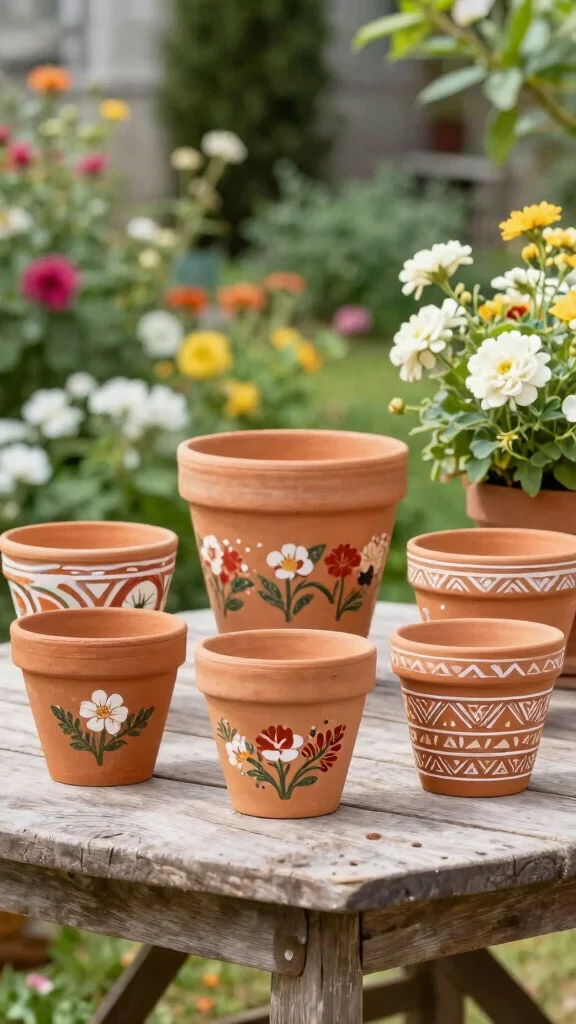
Terracotta pots are timeless, but they can easily be transformed to reflect your personal style! Grab some non-toxic acrylic paints and let your imagination run wild, creating everything from playful polka dots to intricate designs. This project not only enhances the beauty of your garden but also gives you a chance to express your creativity.
Begin by preparing your pots with a good cleaning and a light sanding for better paint adhesion. Once your design is sketched out, use brushes or sponges to bring it to life. The result is a collection of vibrant pots that stand out in any garden setting.
Key steps for terracotta pot painting:
– Clean and prepare your terracotta pots.
– Sand the surface slightly for better paint adhesion.
– Lightly sketch your design before applying paint.
– Finish with a protective clear coat to seal your artwork.
This colorful approach to terracotta pots allows you to create a unique garden space that reflects your personality and artistic flair!
Terracotta pots never go out of style, but your flower pots ideas can shine with a splash of color. Grab non-toxic acrylics, a light sand, and a simple design—polka dots or stripes—and watch your garden come alive this weekend.
3. Vertical Wooden Planters
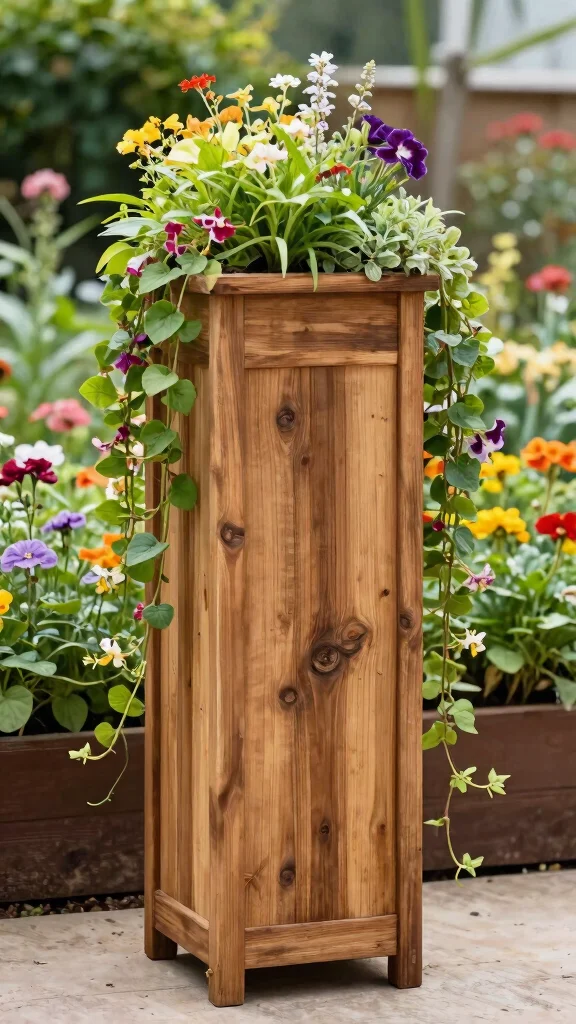
If you’re short on space, vertical wooden planters are a fantastic solution that adds height and dimension to your garden! Easily crafted from reclaimed wood or pallets, these planters are not only eco-friendly but also visually striking. Arrange plants in tiers to showcase a variety of flowers, herbs, or succulents that thrive in a vertical setting.
Start by gathering your wood and cutting it to the desired sizes for creating shelves. Assemble the frame securely, ensuring stability before filling it with soil and plants. This approach not only saves ground space but also creates a stunning focal point in your outdoor area.
Key steps to create vertical wooden planters:
– Collect wood and cut it into appropriate sizes.
– Assemble pieces into a sturdy vertical frame.
– Fill each tier with potting soil and arrange your plants.
Elevate your gardening experience with these vertical planters, making the most of your limited space while inviting lush greenery into your home!
Fun fact: vertical wooden planters let you grow up to 3 layers of blooms in the space of one pot. They boost your flower pots ideas by 50% when you use reclaimed wood and smart shelf spacing.
4. DIY Fabric Pots
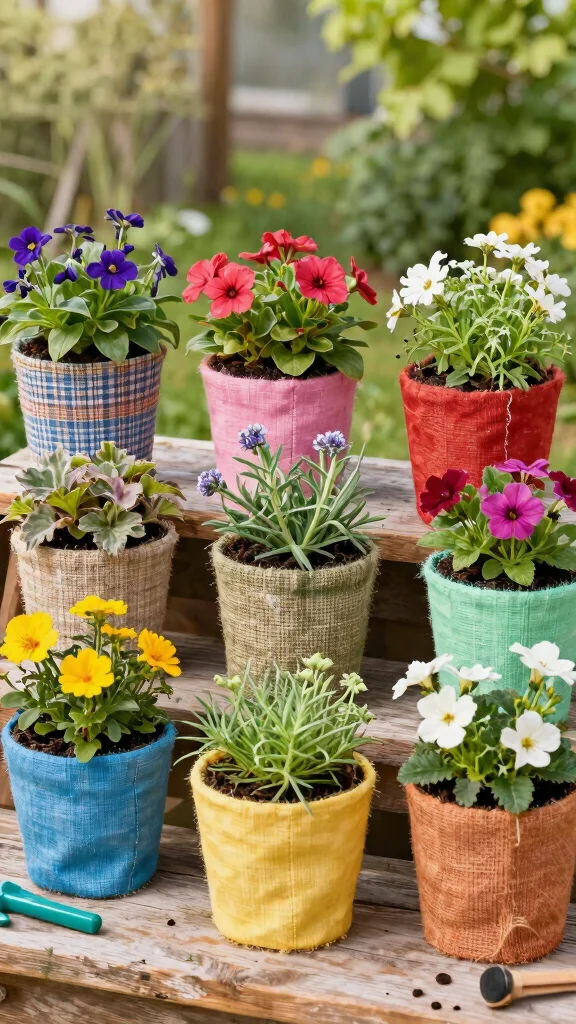
Looking for a unique way to house your plants? Consider crafting DIY fabric pots! Using scrap fabric or old clothing, these stylish containers are not only biodegradable but also allow for excellent drainage. They can be sewn or glued into various shapes, lined with waterproof material to keep the soil intact.
Start by selecting your fabric and cutting it into the desired shapes. Assemble your pots and line them to ensure durability, then fill them with soil and plant your favorite flowers or herbs. This fun project combines creativity and sustainability in a delightful way.
Key steps to create DIY fabric pots:
– Gather fabric scraps or old clothing for your pots.
– Cut fabric and sew or glue to form a container.
– Line the inside with waterproof material for soil retention.
Explore the joy of crafting these fabric pots, which not only benefit your garden but also encourage a creative and eco-friendly lifestyle!
5. Hanging Planters from Recycled Bottles
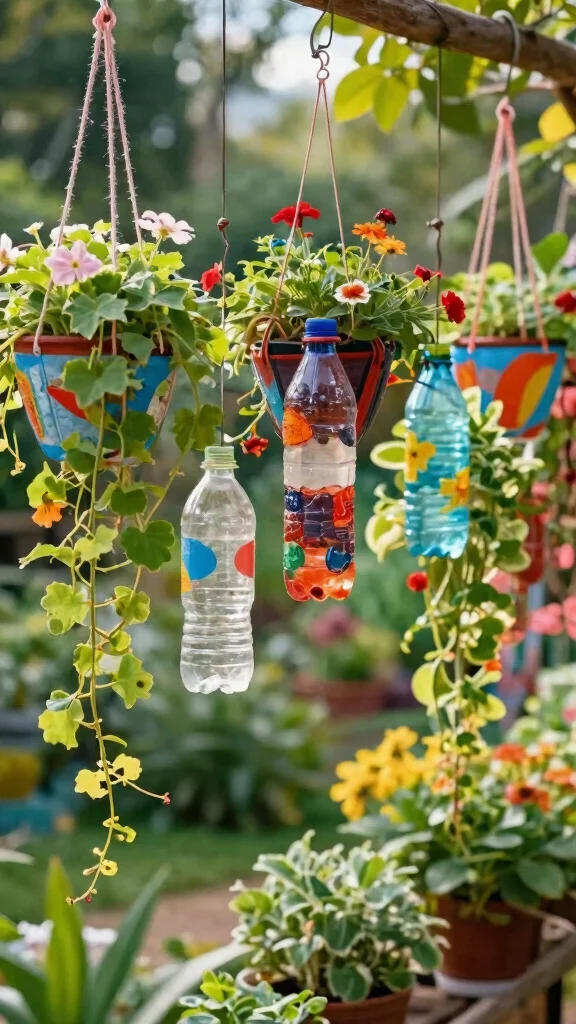
Transform plastic bottles into hanging planters to add a unique flair to your gardening space! By simply cutting the bottles in half and using rope to hang them, you can create an eye-catching vertical garden perfect for trailing plants. This project not only reduces waste but also brings greenery to varying heights in your garden.
Begin by preparing your plastic bottles and cutting them. Use the top half as the planter while the bottom half catches excess water. Hang them in sunny spots for a lively display of your favorite plants.
Key steps to create hanging planters from recycled bottles:
– Gather clean plastic bottles and cut them in half.
– Use the top half for planting and the bottom for water collection.
– Punch holes and thread rope through for hanging.
Experience the joy of gardening while making eco-friendly choices, showcasing delightful hanging planters that encourage sustainability!
6. Stone and Pebble Planters
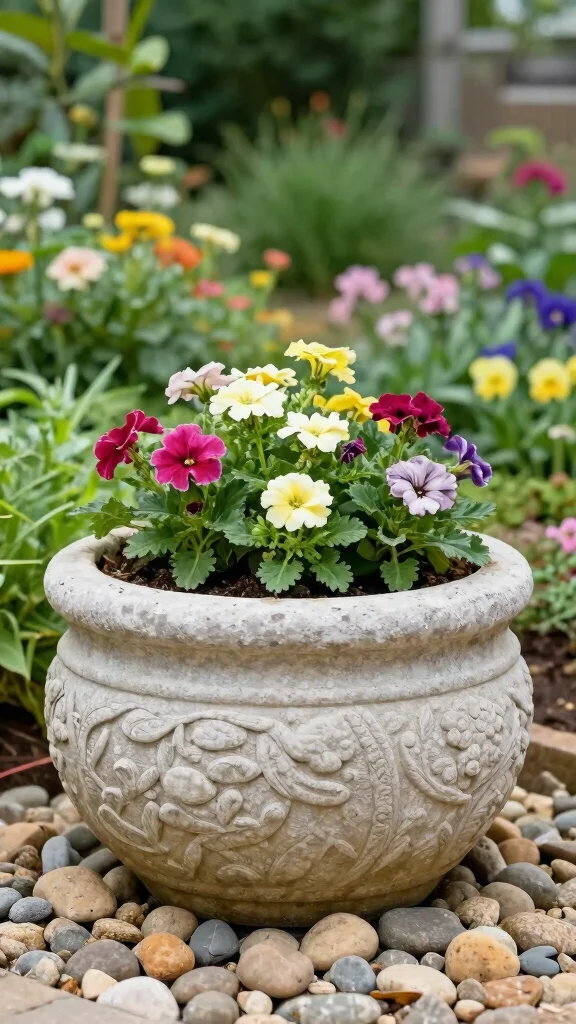
Bring the beauty of nature into your garden with stone and pebble planters! Ideal for those who appreciate rustic charm, these planters can be created by hollowing out a large stone or surrounding a plastic pot with smaller pebbles. This method ensures excellent drainage while blending seamlessly with outdoor environments.
Start by selecting a suitable stone or container and prepare it for planting. Fill with soil and choose plants that will thrive in this natural setting. This organic approach not only looks stunning but also enhances the sustainability of your gardening efforts.
Key steps to create stone and pebble planters:
– Find a suitable stone or container for planting.
– Hollow out the stone or use pebbles around a pot.
– Fill with soil and plant your flowers or succulents.
Enjoy this beautiful and sustainable method for showcasing your favorite plants, all while adding a natural touch to your garden!
7. Natural Fiber Hanging Baskets
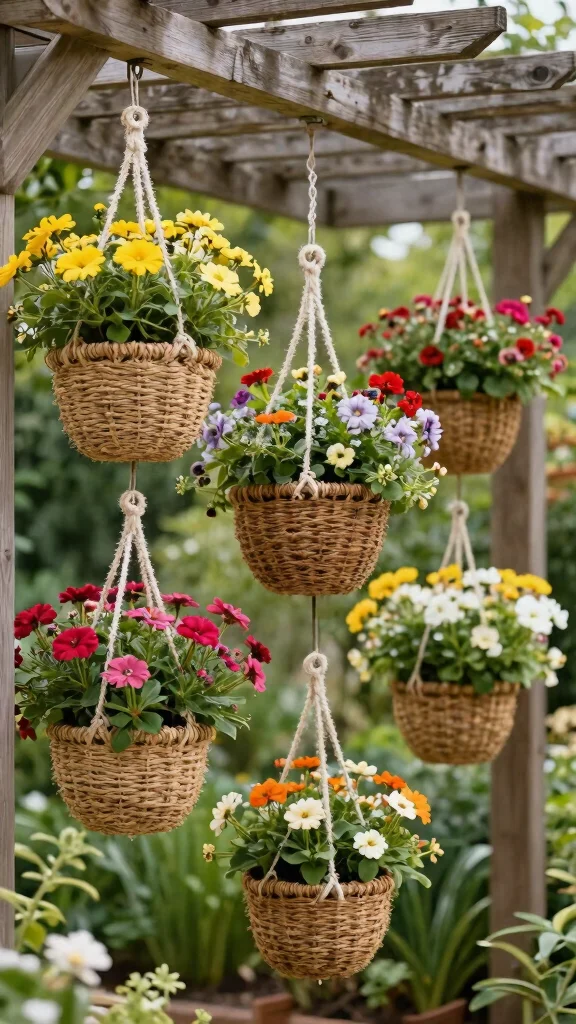
Add texture and warmth to your garden with natural fiber hanging baskets! Made from materials like coconut coir or jute, these biodegradable pots provide excellent drainage and airflow, nurturing your plants beautifully. They can be hung in various locations, enhancing the vibrancy and dimension of your outdoor space.
Start by choosing your materials and shaping your basket. Ensure there are drainage holes to keep your plants healthy, then fill with soil and hang them in your desired spots. This natural option elevates your garden’s aesthetic while promoting sustainability.
Key steps to create natural fiber hanging baskets:
– Choose materials like coconut coir or jute for basket making.
– Ensure the basket has adequate drainage holes.
– Fill with soil and hang in sunny locations.
Enhance your garden’s vibe with these eco-friendly hanging baskets that bring life and beauty to every setting!
Difficulty Rating & Requirements
Overall Difficulty Rating: Medium
Creating flower pot designs ranges from easy to medium difficulty, depending on the project you choose. Some ideas, like upcycled tin can planters or painting terracotta pots, are suitable for beginners. More complex projects, like vertical wooden planters or concrete planters, may require some woodworking skills or experience with heavier materials.
Time Estimate:
⏱ Estimated time: 1-3 hours per project
Most projects can be completed in a few hours. Simple tasks, like painting or decorating pots, take about 1 hour. More involved tasks, such as building vertical planters or concrete pots, may require 2-3 hours, especially if you need drying time between steps.
Skill Requirements:
– Required skills: Basic crafting, painting, and plant care skills.
– Beginner-friendly: Yes, many projects are accessible for beginners. Painting pots or creating fabric pots requires minimal experience and can be learned quickly.
– Skills that can be learned include painting techniques and basic woodworking, while projects like concrete planters might require prior experience with molds and cement.
Tools & Materials Needed:
🧰 Essential items checklist:
– Terracotta pots (required)
– Paint and brushes (optional for decoration)
– Wood (required for vertical planters)
– Soil (required)
– Plants or seeds (required)
– Gloves (optional for protection)
– Drill (optional for hanging planters)
– Concrete mix (required for concrete pots)
Gathering these materials will help ensure a smoother crafting experience.
Step-by-Step Overview:
1. Select Your Project (15 minutes): Decide which flower pot idea suits your style and skill level. Consider whether you want to upcycle, paint, or build.
2. Gather Materials (30 minutes): Collect all necessary materials and tools. Ensure you have everything ready before starting to save time.
3. Create Your Design (1-2 hours): For simple projects, like painting, this step will be quick. For more complex builds, allow time for construction and drying.
4. Planting (30 minutes): Once your pot is ready, fill it with soil and plant your flowers or greenery. This phase is quick but crucial for the success of your project.
5. Clean Up (30 minutes): After you finish, clean your workspace and tools. This ensures you are ready for your next gardening project.
Cost Comparison: Professional vs DIY:
Hiring a professional to create custom flower pots can cost anywhere from $50 to $200 or more, depending on materials and complexity. A DIY approach, on the other hand, can range from $10 to $50, making it an economical choice for those who enjoy hands-on projects. If you’re confident in your skills or willing to learn, tackling these projects yourself is a rewarding and budget-friendly way to enhance your garden.
8. Concrete Planters
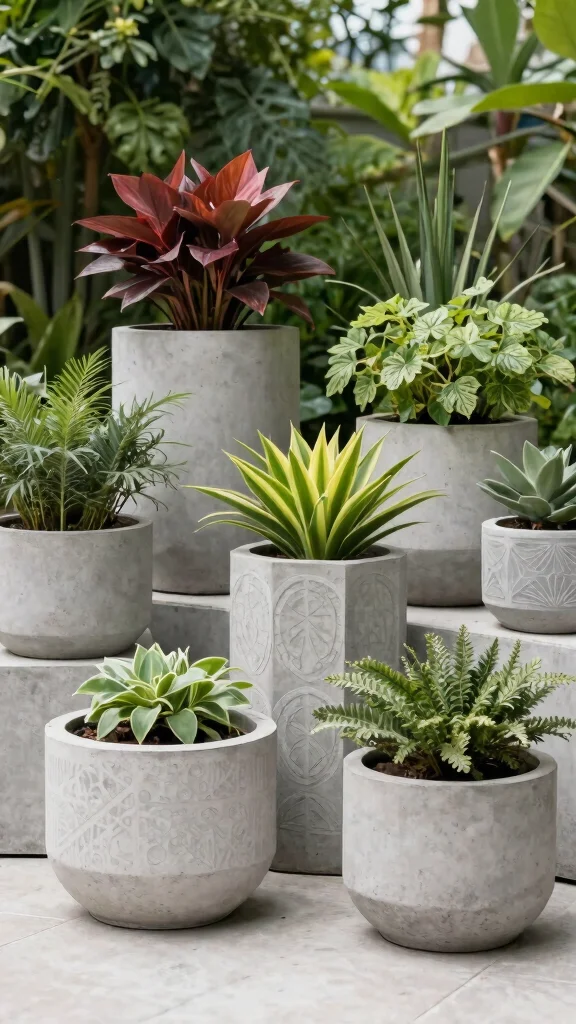
For a chic and modern look, concrete planters are an excellent choice! These sturdy containers can be easily made at home using molds or purchased from stores, providing a sleek aesthetic for any garden. Concrete pots offer great insulation, keeping your plants warm in winter and cool in summer.
Begin by selecting a mold that fits your vision for the planter. Mix concrete as instructed, pour it into the mold, and allow it to set. Once dry, you can personalize it further with paint or decorative elements.
Key steps to create concrete planters:
– Choose a mold for your planter, such as a plastic or silicone container.
– Mix concrete according to package instructions.
– Pour into the mold and let it set.
Embrace durability and style with these contemporary concrete planters, perfect for adding a modern touch to your garden!
9. Wine Barrel Planters
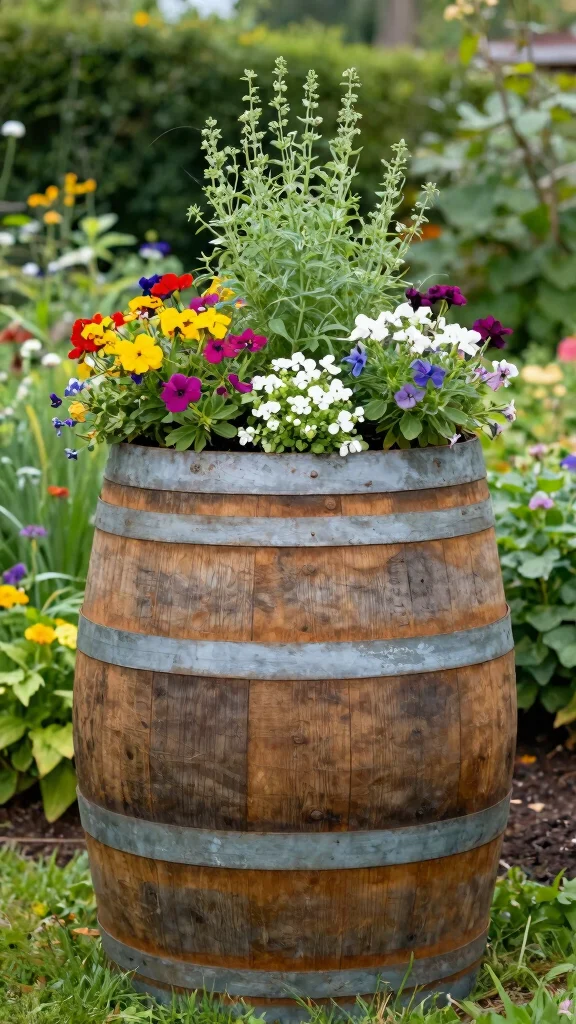
Wine barrels can be repurposed into stunning planters, adding rustic charm to your outdoor space! Whether you cut a barrel in half or keep it whole, these planters offer ample room for a variety of plants while ensuring great drainage.
Start by acquiring an old wine barrel and preparing it for planting. Fill it with quality potting mix and arrange your flowers or herbs. This unique planter not only looks beautiful but also provides functionality in your garden.
Key steps to create wine barrel planters:
– Acquire an old wine barrel from a seller.
– Drill holes for drainage if using a whole barrel.
– Fill with potting mix and plant your flowers.
Enjoy the rustic appeal and practicality of wine barrel planters while creating a beautiful garden feature!
10. Nested Pots
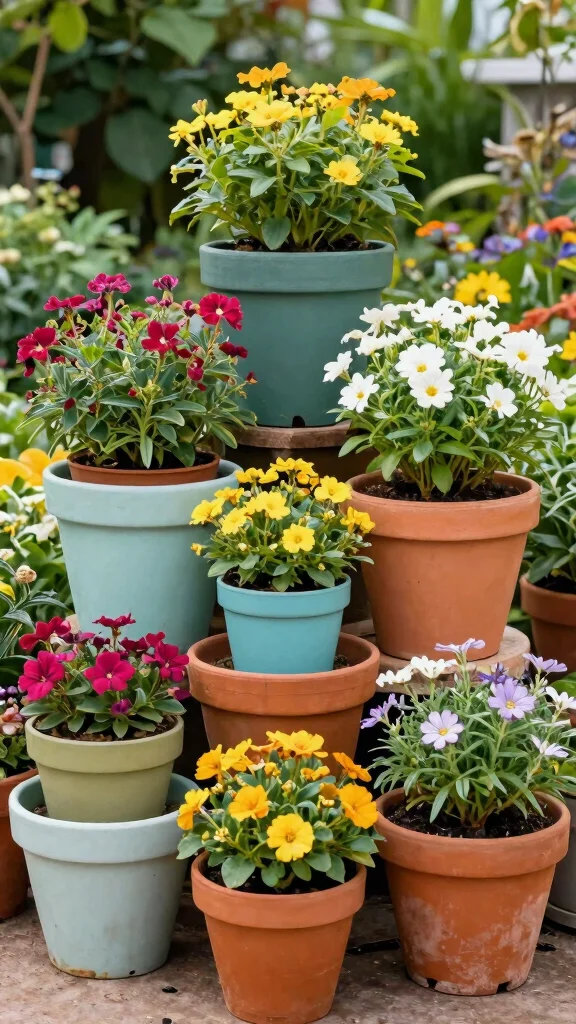
Nested pots offer a clever way to create dynamic displays in your garden while conserving space! By stacking smaller pots inside larger ones, you achieve a layered look that adds visual interest and flexibility. This strategy allows for creativity in plant selection and arrangement, making your garden unique.
Begin by gathering various pot sizes with good drainage. Place the smaller pots into the larger ones, filling gaps with decorative stones or soil. This approach not only beautifies your space but also makes plant care easier.
Key steps to create nested pots:
– Gather pots of varying sizes, ensuring they have drainage holes.
– Place smaller pots into larger ones, filling gaps as needed.
– Arrange in a sunny spot to highlight your beautiful display.
This playful approach adds layers of beauty to your garden while allowing for easy adaptation as your plants grow!
11. Mason Jar Planters
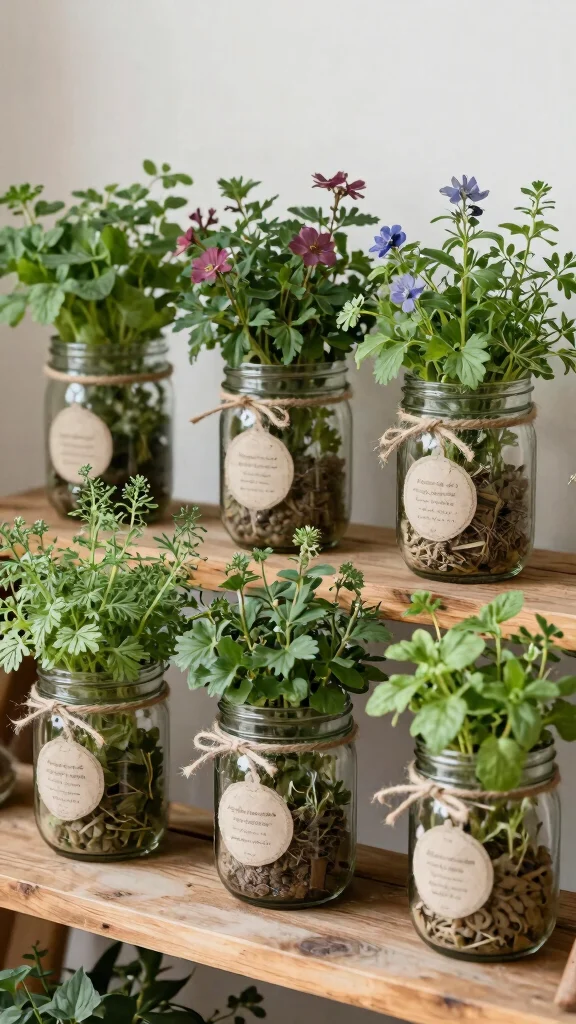
Mason jars are a delightful way to showcase small plants or herbs! Ideal for both indoor and outdoor gardening, these charming containers can be customized with twine or paint for added flair. Plus, the clear glass allows you to observe the roots, making it a fun project for kids.
Start by cleaning your mason jars and adding a layer of gravel for drainage. Fill with potting soil, plant your favorite herbs or flowers, and secure the jars with decorative twine. This versatile option adds a rustic touch to any space.
Key steps to create mason jar planters:
– Gather clean mason jars and remove labels.
– Add stones or gravel to the bottom for drainage.
– Fill with soil and plant your chosen flowers or herbs.
Embrace the whimsy of mason jar planters, creating a delightful blend of charm and functionality in your indoor or outdoor gardens!
12. Colander Planters
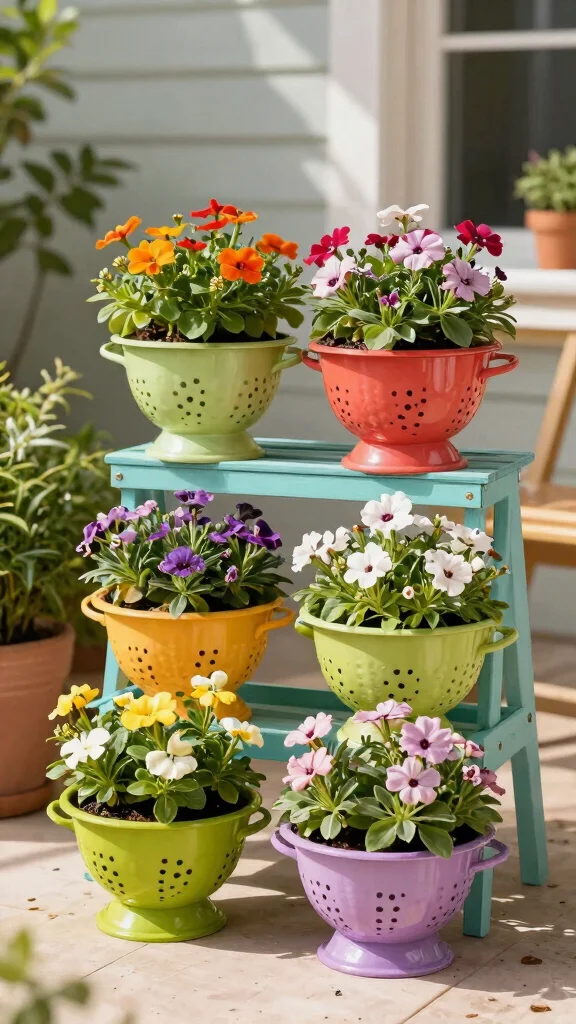
Colanders can be transformed from kitchen tools into quirky flower pots! With their built-in holes, they provide excellent drainage, making them perfect for flowers or herbs. You can add a splash of color by painting them or leaving them as is for a rustic feel.
Gather your clean colanders and consider painting them for a vibrant look. Fill with potting soil and plant your favorite flowers or herbs. This unique approach adds character and fun to your garden.
Key steps to create colander planters:
– Gather clean colanders and ensure they are rust-free.
– Optionally, paint them for a colorful touch.
– Fill with soil and plant your desired flowers or herbs.
Add a fun twist to your gardening with colander planters that celebrate creativity and resourcefulness!
13. Succulent Gardens in Teacups
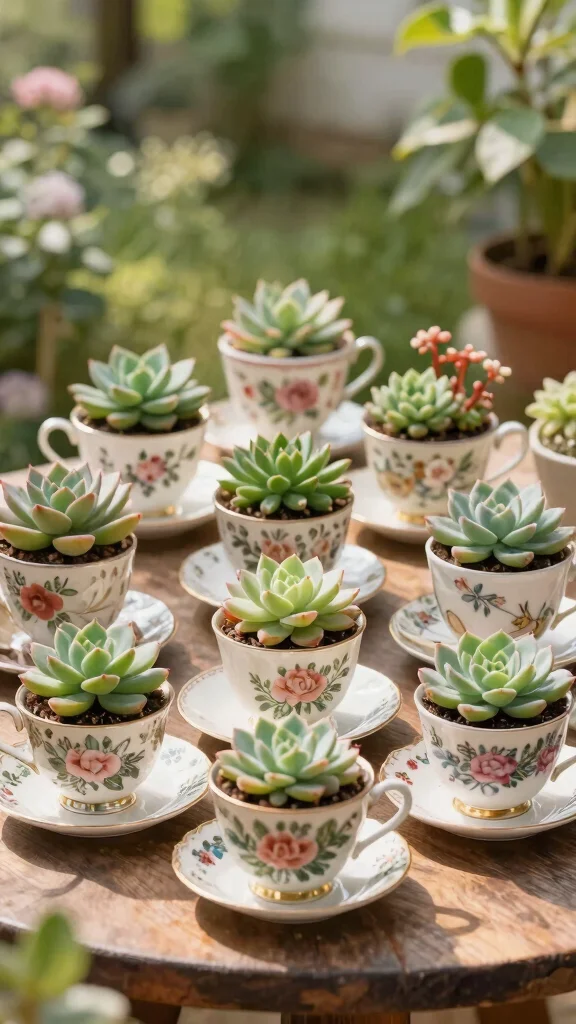
Teacups can become enchanting planters for your succulents! This charming project is perfect for beginners and a great way to reuse old cups. Succulents thrive in these small containers, requiring minimal care while adding elegance to your decor.
Start by selecting old teacups, ensuring they have drainage holes or using gravel for drainage. Fill with cactus soil and plant small succulents inside each cup. Display them in bright, indirect sunlight for a delightful touch.
Key steps to create succulent gardens in teacups:
– Gather old teacups with drainage holes or prepare for gravel.
– Fill with well-draining cactus soil.
– Choose small succulents to plant inside.
Transforming teacups into beautiful succulent gardens adds charm and personality to your home or garden, showcasing your creativity in a unique way!
14. Mud-Painted Flower Pots
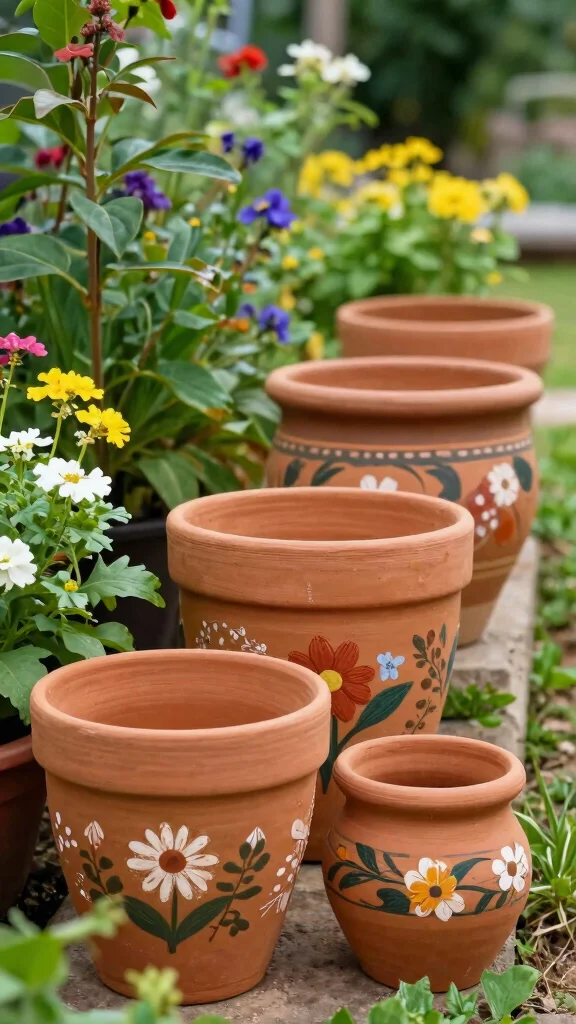
For an eco-friendly option, mud-painted flower pots offer a natural, rustic finish! Using natural pigments mixed with clay soil, you can create vibrant designs on terracotta pots. This technique not only emphasizes sustainability but also enhances the organic feel of your garden.
Start by collecting clay soil and mixing it with water and natural pigments to create your paint. Clean your pots and apply the mud paint with a brush or sponge, allowing them to dry thoroughly before use.
Key steps for mud-painted flower pots:
– Collect clay soil and mix with water and pigments.
– Clean terracotta pots and apply the mud paint.
– Allow to dry completely before planting.
This artistic technique celebrates sustainability while creating unique flower pots that beautifully enhance your garden!
Conclusion
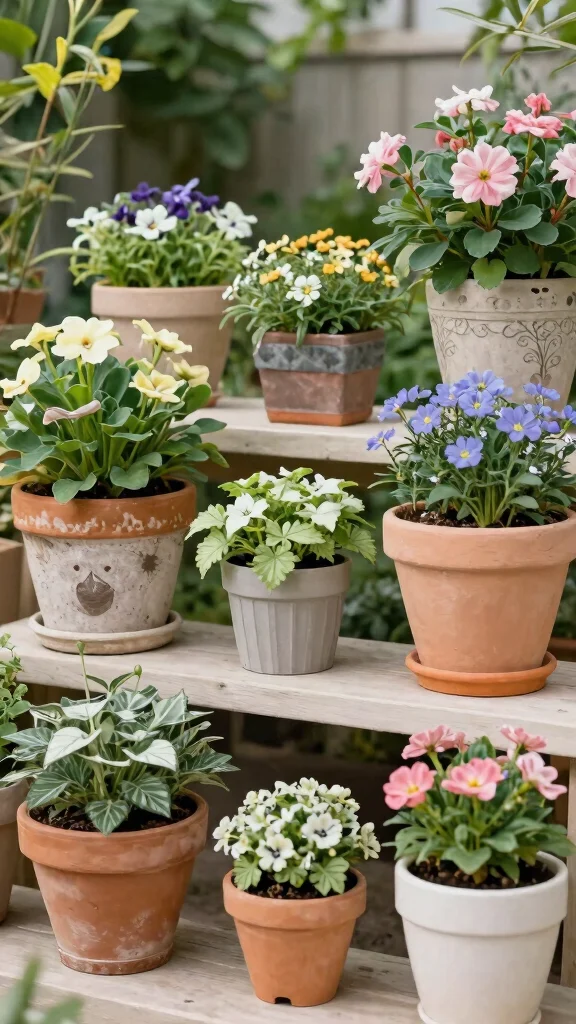
Exploring creative and eco-friendly flower pot ideas not only enhances the beauty of your garden but also contributes to a sustainable lifestyle. From upcycled materials to innovative designs, there’s something for every gardener, regardless of skill level. Embrace these unique container gardening methods to cultivate an outdoor space that reflects your personality while being kind to the planet. Which idea are you excited to try? Share your gardening journey and let your creativity bloom!
Note: We aim to provide accurate product links, but some may occasionally expire or become unavailable. If this happens, please search directly on Amazon for the product or a suitable alternative.
This post contains Amazon affiliate links, meaning we may earn a small commission if you purchase through our links, at no extra cost to you.
Frequently Asked Questions
What are eco-friendly flower pot ideas that fit any garden style?
There are plenty of eco-friendly flower pots ideas that fit any garden style. Start with upcycling: use recycled containers like old buckets, tins, wooden crates, or ceramic pots with a fresh coat of paint.
Choose peat-free, sustainable potting mix with compost, coconut coir, and perlite to keep soil healthy without harming the planet. For watering, consider self-watering features or a simple basin setup to reduce runoff.
For drainage and moisture, line pots with landscape fabric or add a bottom layer of stones, and group pots by height and color for a cohesive look. This approach pairs well with unique container gardening ideas and seasonal displays.
How do I use the best potting techniques for seasonal gardening tips when selecting pots?
To apply the best potting techniques for seasonal gardening tips, start with the right container size and a peat-free mix tailored to your climate.
Match plant needs to season: spring herbs and leafy annuals, summer blooms, fall vegetables and greens, and winter foliage where frosts permit. Use a well-draining mix and ensure the pot has drainage holes.
Key steps include layering a small gravel base, filling with peat-free potting soil, moderating watering, and rotating plants each season to keep soil healthy and minimize pests.
What are some creative flower pot designs for beginner gardening projects?
There are many creative flower pot designs perfect for beginner gardening projects. Start with simple upcycled planters: painted tin cans, teapots, or wooden crates that glow with a fresh coat of paint.
Try vertical options like wall planters or tiered stands and even repurposed pallets to add height and interest with minimal effort.
Color-blocking pots and grouping similar plants keeps maintenance low while delivering a big visual impact. Labeling your choices also helps beginners stay organized.
How can unique container gardening support seasonal gardening tips all year round?
Unique container gardening lets you place color and texture anywhere while following seasonal gardening tips.
Choose containers suited for your climate—ceramic or terracotta for sunny, frost-prone spots; lightweight resin or fiberglass for easy movability—and ensure good drainage and frost protection where needed.
Season-by-season plan: spring herbs in small pots; summer blooms in hanging baskets or window boxes; fall bulbs tucked into troughs; winter greens in sheltered, bright spots. Regular maintenance like rotating plants and refreshing compost keeps things thriving year-round.
What beginner-friendly flower pots ideas can help me start sustainable gardening today?
If you’re just starting, pick 2–3 flower pots ideas that are easy to manage and eco-friendly.
Try upcycling: a ceramic pot with a fresh glaze; a wooden crate with a liner; or repurposed teapots for quirky style.
Plant choices: easy herbs (basil, chives), edible flowers, and low-maintenance perennials. Use a peat-free potting mix and mulch to preserve soil moisture. Sustainability steps like collecting rainwater, composting kitchen scraps, and avoiding peat help your garden stay green.
Keep it simple with beginner gardening projects that build confidence and set you up for ongoing success.